
Who We Serve
United Nations High Commissioner for Refugees (UNHCR) Definition of a Refugee
A refugee is a person who "owing to a well-founded fear of being persecuted for reasons of race, religion, nationality, membership of a particular social group, or political opinion, is outside the country of his nationality, and is unable to or, owing to such fear, is unwilling to avail himself of the protection of that country."
Refugees in Indianapolis
World wide millions of persons are daily forced to flee their homelands and seek refuge in camps located in neighboring countries. Refugees must leave the familiar due to war, persecution and human rights violations most Americans cannot fathom. Very few refugees are ever offered resettlement in a third country. Every year Indianapolis has the great fortune of becoming home to a small fraction of the worldwide refugee population. As one of only two refugee resettlement agencies in Indianapolis, for 30 years Exodus has had the responsibility and privilege to extend a warm welcome to these courageous persons seeking safety, freedom and a new home. Beyond hospitality Exodus' role is also to provide the goods, services, support and resources necessary to empower these newcomers so that they can achieve self-sufficiency and create the secure and free life that every person deserves. To accomplish these goals Exodus administers a reception and placement program, match grant program, employment program, Language and Cultural Orientation program and Mental wellness program. Additionally, Exodus administers a Language and Cultural Orientation program.
In recent years, Indianapolis has seen a dramatic increase in the number of refugees being resettled in the city. In 2008 Exodus resettled more than 400 persons, in 2009 more than 500 and in 2010 more than 650. Exodus is projected to resettle 720 persons in 2011. In addition to the refugees assigned to Indianapolis at a national level, refugees who were resettled elsewhere are increasingly migrating to Indianapolis (secondary migrants). Because Indianapolis is now considered a major Burmese refugee resettlement site and it is anticipated that the city will continue to see large numbers of Karen, Chin, and Karenni refugees in the coming years, it is imperative that English language training, cultural orientation and employment readiness preparation resources be strengthened in the city. This is even more essential during the difficult economic times that make securing employment more challenging for limited-English-speaking immigrants.
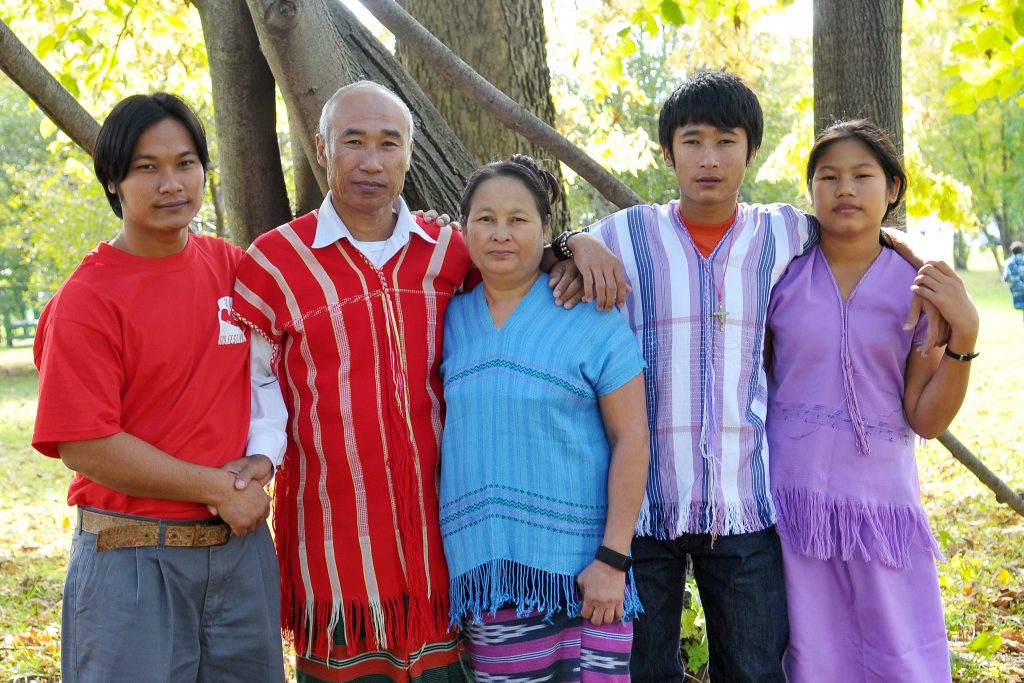
Karen, Chin, and Karenni Burmese refugees make up more than 95 percent of the persons making their home in Indianapolis. Iraqi and Eritrean refugees are also being resettled in Indianapolis as well as various other groups. The Karen, Karenni and Chin possess little to no English language skills upon arrival to the U.S. They may have completed the American equivalent of grammar or high school; few have post-high school education. Many of the Iraqi refugees have some English skills and higher education. The more education the client has generally the more English language knowledge they possess.
Exodus clients include individual refugees and refugee families (children, adults, and elders). Males and females are equally served. Certified victims of human trafficking, asylees, secondary migrant refugees are also served by Exodus. In addition, some clients arrive with prior existing conditions such as mental and/or physical disabilities, including HIV/AIDS. Exodus accepts clients regardless of their challenges.
By meeting refugee's basic needs upon arrival, Exodus assists clients in building a strong foundation upon which they can make the transition from a life of impermanence to a life of stability in freedom and security. Exodus understands the great barriers refugees have to overcome when they arrive. Refugees are persons of uncommon courage. Most have survived persecution, war, hunger, genocide, forced relocation, rape, and many other unspeakable experiences. When they finally arrive in the United States and Indianapolis, they may have been living as refugees in camps for more than a decade. Most refugees speak little to no English. Many have skills that are not easily transferable to the American workplace. And, many are not accustomed to living in a technologically driven culture, and one that is in significant ways very different from their own. Once refugees arrive in Indianapolis they can experience disorientation, a sense of being overwhelmed, feelings of insecurity, sadness at leaving familiar things behind, grief and loss, culture shock and fear of the unknown situation in which they find themselves. However despite the adversity they have experienced most refugees who make their home in Indianapolis are eager to engage the challenges and opportunities that the United States offers in order to make a better life for themselves and their families.
Exodus staff understands the vulnerability, courage and potential of refugees. Our case management services and programs are designed to work with each client on an individual basis to prepare him or her for self-sufficiency. Refugee resettlement services build upon each other to familiarize each client with the nature of what is needed in their transition and to assist in developing the tools necessary to achieve success. As clients progress through the six month resettlement period, optimally they develop more confidence, come to understand their new community and what it has to offer (and how to access it), and learn what it takes to achieve economic independence and stability.
Ultimately, gaining self-sufficiency is a process of reducing one's dependence on agency and government services, developing human capital within the family, increasing family income, building the individual's or family's capacity for savings, and achieving new skill levels. Families and individuals become economically self-sufficient by having access to life-sustaining resources, such as employment, housing, education, medical services and the support of a personal network of relatives, friends and community members. Achieving self-sufficiency requires access to resources for upward mobility. By having their basic needs met during the six month resettlement period and beyond, combined with a full array of social and medical services, English language training and culture orientation, and employment services, Exodus clients are able to realize their dreams of a new life in the United States in freedom, security, and independence.
Refugees are persons of uncommon courage who have sacrificed their homes and way of life to find safety, security and a future for their families in a far away land known as Indiana. They are persons of resilience who come to their new community eager to work hard and contribute to the common good. They are persons of faith who pray that someday there will be peace in their homeland. They are persons of vitality and creativity who bring art, music, dance, culture, food and ritual to share with their new friends. They are persons of hope who believe that despite their great suffering there is a brighter future for themselves and those they love.